
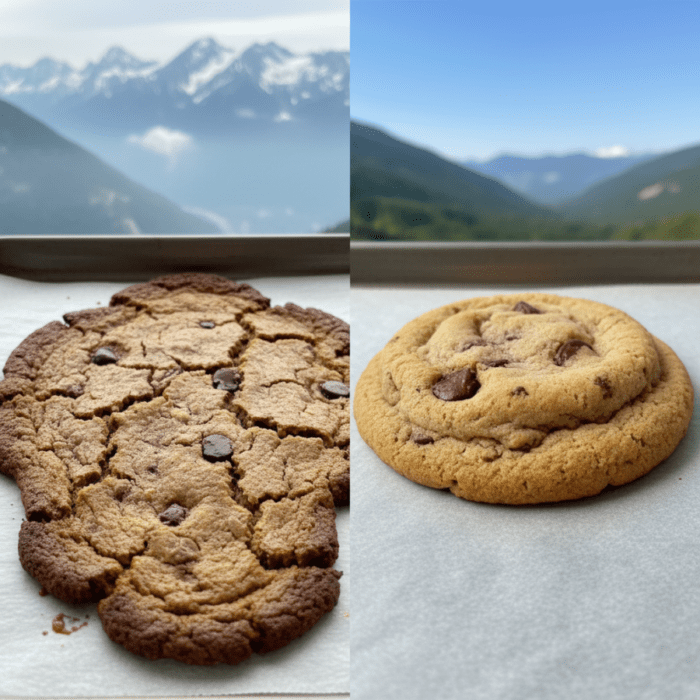
Did you know that baking at high altitudes can significantly alter the outcome of your cookies? Studies suggest that anywhere above 3,000 feet, the effects of lower air pressure become noticeable, often leading to flatter, crispier, or even burnt cookies. This is a common frustration for bakers who find their beloved recipes don’t quite turn out the same way when they move to a higher elevation.
The Science Behind the Struggle
At high altitudes, the atmospheric pressure is lower. This has a direct impact on several key ingredients in your cookie dough:
- Flour: Lower pressure allows moisture to evaporate more quickly from the flour. This can make doughs seem drier and harder to work with.
- Sugar: Sugar tends to caramelize and brown faster under lower pressure and with less moisture. This means your cookies can burn on the outside before the inside is fully cooked.
- Leavening Agents: Baking soda and baking powder create gas bubbles to make cookies rise. In lower pressure environments, these gases expand more rapidly, potentially causing cookies to spread too much and become thin and crisp.
- Eggs: The water content in eggs also evaporates more readily at higher altitudes. This can lead to a drier dough and a less chewy cookie.
According to The Joy of Baking, a reputable resource for baking enthusiasts, these changes are not just theoretical; they are a consistent challenge faced by bakers worldwide.
Common High-Altitude Cookie Problems
When baking at higher elevations, you might notice:
- Excessive Spreading: Cookies spread out much more than they should, becoming thin and flat.
- Dryness: The finished cookies are often dry and crumbly rather than soft and chewy.
- Uneven Baking: The edges might be over-baked and burnt while the center remains undercooked.
- Cracking: The surface of the cookie may crack excessively.
How to Adapt Your Cookie Recipes for High Altitude
Don’t let altitude deter your baking dreams! With a few simple adjustments, you can achieve delicious, perfectly baked cookies. The general principle is to counteract the effects of lower pressure by making the dough richer and more stable.
Adjusting Your Ingredients
- Increase Flour: Add 1-2 tablespoons of flour per cup of flour called for in the recipe. This helps to absorb excess moisture and provide structure.
- Decrease Sugar: Reduce sugar by 1-2 tablespoons per cup. Less sugar means less rapid browning.
- Increase Liquid: Add 1-2 tablespoons of liquid (like milk or water) per cup of flour. This helps to rehydrate the dough.
- Add an Extra Egg Yolk: Egg yolks add richness and fat, which can help prevent excessive spreading and dryness.
- Use Less Leavening Agent: Reduce baking soda or baking powder by about 1/8 to 1/4 teaspoon per teaspoon called for. This controls the rapid expansion of gases.
- Adjust Oven Temperature: You might need to increase your oven temperature by 15-25°F (8-14°C). This helps the cookies set faster, preventing them from spreading too much.
Testing and Tweaking
It’s important to remember that these are general guidelines. The exact adjustments needed can vary depending on your specific altitude and recipe. For instance, if you’re making a classic Kitchen Sink Cookies recipe, you might find that adding a bit more flour and slightly reducing the sugar makes a significant difference. The King Arthur Baking Company offers extensive resources and advice for high-altitude bakers, emphasising the importance of experimentation.
Conclusion
Baking at high altitudes presents unique challenges, but understanding the science behind it empowers you to adapt your favourite recipes. By making small, strategic changes to your ingredients and oven settings, you can ensure your cookies turn out just as delicious and perfectly textured as they do at sea level. Happy baking!